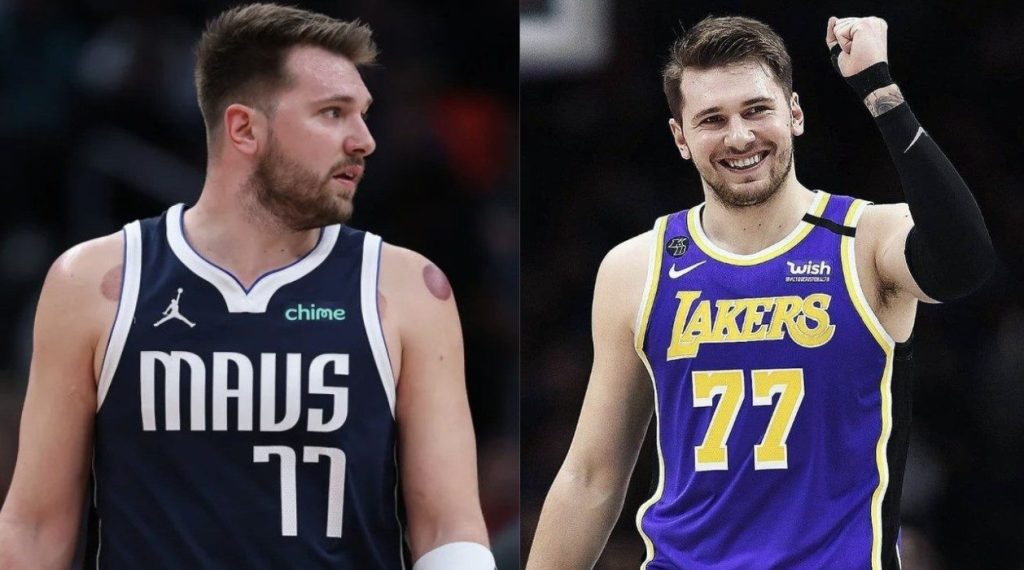
New City, Same Luka: How Dončić Turned a Trade Into a Testament of Mental Strength
The moment it happened, it felt unreal.
Luka Dončić—the heart of the Dallas Mavericks, the guy who made triple-doubles look like layups—was traded. Just like that. A name we thought was untouchable, moved like a chess piece in a league where loyalty is a slogan, not a guarantee.
Fans were stunned. Teammates blindsided. Luka? Quiet. Professional. Processing.
But now? Now, Luka’s reminding the world exactly who he is.
The Emotional Side of a Blockbuster Trade
Let’s not downplay it—getting traded isn’t just changing jerseys. It’s ripping roots out of the ground and planting them somewhere new.
For Luka, Dallas wasn’t just his team—it was home. He arrived as a teenager, a European mystery with game far beyond his years. The city watched him grow, crowned him “the future,” and built a franchise around him.
So when the trade went through—reportedly part of a bold, multi-team deal aiming to shift the balance of power in the West—it didn’t just shake the league. It shook him.
And yet, Luka didn’t sulk. He didn’t retreat. He showed up.
Landing in a New System, But Never Losing Himself
Adjusting to a new team mid-season is tough for anyone—let alone a ball-dominant guard with a unique rhythm and feel for the game.
But Luka made it work.
He leaned into leadership. He adapted his playstyle. He found connection with his new teammates—guys like [insert teammate name], who’ve praised his court vision and calm under pressure. And most importantly? He let his game do the talking.
Since the trade, Luka has:
- Averaged 28+ points per game, barely missing a beat.
- Continued to lead in assists and rebounds, proving he’s still a complete player.
- Hit multiple game-winners, silencing anyone who thought he’d fade outside of Dallas.
But the real flex? He’s doing it all while learning a new system, building chemistry, and managing the emotional weight of starting over.
The Family Behind the Player
We can’t ignore the ripple effect on Luka’s circle. His close-knit family—especially his mom, who’s been a constant since his early days—had to reset too. New city. New routine. New everything.
But they’ve been there every step, helping Luka keep perspective. That’s the quiet part of every trade: the support systems that carry the athlete while the world watches the stat lines.
A Lesson in Emotional Intelligence
This isn’t just a basketball comeback—it’s a case study in emotional intelligence.
Luka had every reason to be bitter. To feel betrayed. To shut down. But instead, he processed, adjusted, and rose.
He turned pain into fuel. Uncertainty into leadership. And that takes more than talent—that takes wisdom.
It’s easy to dominate when everything goes your way. It’s something else to do it after being blindsided by the business of the game.
Teams Win Titles—But People Build Culture
Luka’s presence has already started to reshape the identity of his new team. You can see it in how teammates play harder when he’s on the floor. In how the crowd rallies behind him, even though he’s new. In how the league now sees his team as a real threat—not just because of the trade, but because Luka brought belief with him.
That’s the quiet power of a superstar who refuses to fold.
Final Whistle
Luka Dončić may have been traded, but he was never lost.
He’s not just thriving in a new city—he’s proving that greatness travels. That no matter where you put him, he’ll find his way. That emotional strength, maturity, and quiet fire matter just as much as step-backs and stat sheets.
And if you’re watching closely, you’ll see it:
He didn’t just survive the trade.
He became more because of it.
Because that’s what the great ones do.